




A hospital in Mumbai faces €200,000 in GDPR fines despite being located outside EU borders—a stark reminder that today’s data protection laws transcend geographical boundaries. Whether you’re an individual concerned about your social media privacy or a business navigating compliance requirements, understanding global data protection laws isn’t just about avoiding penalties—it’s about building trust in our increasingly interconnected digital world.
In this comprehensive guide, we’ll decode the complex landscape of global data privacy regulations, explain your rights as a data subject, and provide actionable strategies for compliance. From the far-reaching GDPR to emerging frameworks in Africa and Asia, we’ll equip you with the knowledge to navigate data protection with confidence.
The Global Data Privacy Landscape in 2025
Think of data protection laws as traffic rules for the digital highway—different countries have their own regulations, but they share the fundamental goal of keeping personal data safe. While the specific requirements vary, most frameworks focus on similar principles: transparency, consent, purpose limitation, data minimization, and security.
Over 130 countries now have some form of data protection legislation, with the number growing each year. This proliferation of laws creates both challenges and opportunities for organizations operating globally. Understanding the nuances between these regulations is crucial for effective compliance strategies.
Did you know? A single website may need to comply with dozens of different privacy laws depending on where its visitors are located—not where the company is based.
Let’s examine the seven key regulatory frameworks that shape the global data protection landscape today:
The General Data Protection Regulation (GDPR)
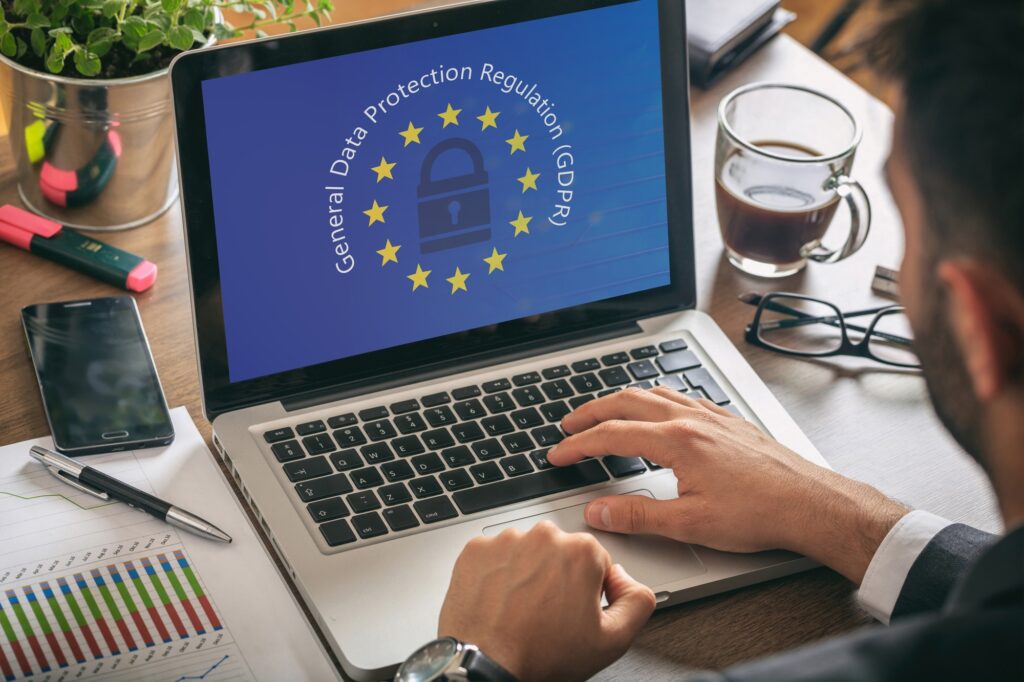
Implemented in May 2018, the European Union’s General Data Protection Regulation (GDPR) remains the gold standard for data protection worldwide. Its influence extends far beyond Europe’s borders, affecting any organization that processes EU residents’ personal data, regardless of where the organization is located.
Key GDPR Principles
- Lawfulness, fairness, and transparency in data processing
- Purpose limitation (data collected for specified, explicit purposes)
- Data minimization (only what’s necessary for the stated purpose)
- Accuracy (ensuring data is correct and up-to-date)
- Storage limitation (kept no longer than necessary)
- Integrity and confidentiality (appropriate security measures)
- Accountability (demonstrating compliance)
Data Subject Rights Under GDPR
Access and Information Rights
- Right to be informed about collection and use
- Right to access personal data held about you
- Right to data portability (receive and reuse your data)
Control Rights
- Right to rectification of inaccurate data
- Right to erasure (“right to be forgotten”)
- Right to restrict processing
- Right to object to processing
- Rights related to automated decision making
GDPR Compliance Requirements
Organizations must implement appropriate technical and organizational measures to ensure data protection. These include:
- Conducting data protection impact assessments (DPIAs)
- Implementing privacy by design and default
- Maintaining records of processing activities
- Appointing a Data Protection Officer (DPO) when required
- Reporting data breaches within 72 hours
- Ensuring lawful basis for processing (including valid consent)
Penalties for Non-Compliance: Organizations can face fines of up to €20 million or 4% of global annual revenue, whichever is higher. In 2023, Meta received a record €1.2 billion fine for transferring EU user data to the US without adequate safeguards.
Master GDPR Compliance
Get our comprehensive GDPR Compliance Checklist with step-by-step guidance for implementing the regulation’s requirements.
California Consumer Privacy Act (CCPA) and California Privacy Rights Act (CPRA)

California leads the United States in consumer privacy protection with two landmark laws: the California Consumer Privacy Act (CCPA), effective since January 2020, and its amendment, the California Privacy Rights Act (CPRA), which took effect in January 2023.
Who Must Comply?
These laws apply to for-profit businesses that do business in California and meet at least one of these thresholds:
- Annual gross revenue exceeding $25 million
- Buy, sell, or share personal information of 100,000+ California consumers or households
- Derive 50% or more of annual revenue from selling or sharing consumers’ personal information
Key Consumer Rights
CCPA Rights
- Right to know what personal information is collected
- Right to delete personal information
- Right to opt-out of the sale of personal information
- Right to non-discrimination for exercising rights
Additional CPRA Rights
- Right to correct inaccurate personal information
- Right to limit use and disclosure of sensitive personal information
- Right to opt-out of automated decision-making technology
- Expanded right to data portability
CPRA Enhancements to CCPA
The CPRA strengthened California’s privacy framework by:
- Creating a new category of “sensitive personal information” with additional protections
- Establishing the California Privacy Protection Agency (CPPA) for enforcement
- Extending the exemptions for employee and B2B data until January 1, 2023
- Requiring risk assessments and cybersecurity audits for high-risk activities
- Tripling fines for violations involving children’s data
- Implementing data minimization and purpose limitation principles
Data Hygiene Tip: Under the CPRA, businesses can only retain personal information for as long as “reasonably necessary” for the disclosed purpose. Review your data retention policies to ensure compliance.
California Privacy Compliance Made Simple
Our CCPA/CPRA Compliance Guide includes policy templates, disclosure examples, and implementation checklists.
Other U.S. State Privacy Laws
Following California’s lead, several other U.S. states have enacted comprehensive privacy legislation. While these laws share many similarities, their differences create compliance challenges for businesses operating across multiple states.
| State Law | Effective Date | Key Features | Applicability Threshold |
| Virginia Consumer Data Protection Act (VCDPA) | January 1, 2023 | Opt-in consent for sensitive data; no private right of action | 100,000+ consumers or 25,000+ consumers if 50%+ revenue from data sales |
| Colorado Privacy Act (CPA) | July 1, 2023 | Universal opt-out mechanism; right to appeal denied requests | 100,000+ consumers or 25,000+ consumers if data sales revenue |
| Connecticut Data Privacy Act (CTDPA) | July 1, 2023 | Excludes payment transaction data; 60-day cure period (expired Dec 2024) | 100,000+ consumers or 25,000+ consumers if 25%+ revenue from data sales |
| Utah Consumer Privacy Act (UCPA) | December 31, 2023 | More business-friendly; no right to correction or profiling opt-out | $25M+ revenue and 100,000+ consumers or 25,000+ consumers if 50%+ revenue from data sales |
| Texas Data Privacy and Security Act (TDPSA) | July 1, 2024 | No revenue threshold; perpetual 30-day cure period | Businesses operating in Texas; small business exemption |
| Oregon Consumer Privacy Act (OCPA) | July 1, 2024 | Broad definition of sensitive data; data-level exemptions | 100,000+ consumers or 25,000+ consumers if 25%+ revenue from data sales |
| Montana Consumer Data Privacy Act (MTCDPA) | October 1, 2024 | No revenue threshold; 60-day cure period (expires April 2026) | 50,000+ consumers or 25,000+ consumers if 25%+ revenue from data sales |
| Delaware Personal Data Privacy Act (DPDPA) | January 1, 2025 | Lower thresholds; $10,000 per violation penalty | 35,000+ consumers or 10,000+ consumers if 20%+ revenue from data sales |
Common Elements Across State Laws

Despite their differences, these state privacy laws share several common elements:
- Consumer rights to access, delete, and correct personal data
- Right to opt out of targeted advertising and data sales
- Special protections for sensitive data
- Requirements for clear privacy notices
- Data security obligations
- Enforcement by state attorneys general (no private right of action except limited cases under CCPA/CPRA)
Key Differences to Navigate
The most significant variations between state laws include:
- Applicability thresholds (revenue, number of consumers)
- Definitions of “sale” and “sensitive data”
- Consent requirements (opt-in vs. opt-out)
- Cure periods for violations
- Exemptions for certain data types or entities
- Implementation of universal opt-out mechanisms
“The patchwork of state privacy laws creates significant compliance challenges for businesses. A federal privacy law would provide much-needed uniformity, but until then, companies must navigate this complex landscape carefully.”
— Dr. Gabriela Zanfir-Fortuna, Future of Privacy Forum
Navigate the U.S. Privacy Patchwork
Our U.S. State Privacy Laws Comparison Chart helps you identify which laws apply to your business and the specific requirements for each state.
U.S. Federal Privacy Laws

While the U.S. lacks a comprehensive federal privacy law, several sector-specific regulations govern particular types of data or industries. Understanding these laws is crucial for organizations handling sensitive information.
Health Insurance Portability and Accountability Act (HIPAA)
HIPAA regulates protected health information (PHI) handled by covered entities (healthcare providers, health plans, and healthcare clearinghouses) and their business associates.
- Requires safeguards for protected health information
- Mandates patient rights to access and amend their health records
- Includes breach notification requirements
- Enforced by the Department of Health and Human Services
Gramm-Leach-Bliley Act (GLBA)
GLBA applies to financial institutions and governs the collection, use, and disclosure of customers’ nonpublic personal information (NPI).
- Requires privacy notices explaining information-sharing practices
- Gives consumers the right to opt out of certain information sharing
- Mandates safeguards to protect financial data
- Enforced by the Federal Trade Commission and other financial regulators
Children’s Online Privacy Protection Act (COPPA)
COPPA protects the personal information of children under 13 collected online.
- Requires verifiable parental consent before collecting children’s data
- Mandates clear privacy policies and parental access to children’s data
- Limits data retention and requires reasonable security measures
- Enforced by the Federal Trade Commission
Family Educational Rights and Privacy Act (FERPA)
FERPA protects the privacy of student education records at educational institutions that receive federal funding.
- Gives parents/eligible students the right to access education records
- Requires consent for disclosure of personally identifiable information
- Allows students to request correction of inaccurate records
- Enforced by the Department of Education
Federal Trade Commission Act (FTC Act)
The FTC Act prohibits unfair or deceptive practices, which the FTC has used to enforce privacy and data security standards.
- Requires companies to follow their stated privacy policies
- Mandates reasonable security measures for sensitive consumer data
- Prohibits deceptive statements about data collection and use
- Enforced through FTC investigations and consent orders
Data Hygiene Tip: Even if your organization isn’t directly subject to these laws, adopting their principles as best practices can strengthen your overall data protection posture and prepare you for future regulations.
Canada’s Personal Information Protection and Electronic Documents Act (PIPEDA)

Canada’s primary federal privacy law, PIPEDA, governs how private sector organizations collect, use, and disclose personal information in the course of commercial activities. It applies to all businesses operating in Canada, except in provinces with substantially similar legislation (currently Quebec, British Columbia, and Alberta).
PIPEDA’s 10 Fair Information Principles
- Accountability: Organizations are responsible for personal information under their control and must designate someone to be accountable for compliance.
- Identifying Purposes: Organizations must identify the purposes for collecting personal information before or at the time of collection.
- Consent: Knowledge and consent are required for the collection, use, or disclosure of personal information (with limited exceptions).
- Limiting Collection: Collection must be limited to what’s necessary for identified purposes.
- Limiting Use, Disclosure, and Retention: Personal information should not be used or disclosed for purposes other than those for which it was collected, and should be retained only as long as necessary.
- Accuracy: Personal information must be as accurate, complete, and up-to-date as necessary for the purposes.
- Safeguards: Personal information must be protected by appropriate security measures.
- Openness: Organizations must make information about their privacy policies and practices readily available.
- Individual Access: Upon request, individuals must be informed of the existence, use, and disclosure of their personal information, and given access to it.
- Challenging Compliance: Individuals must be able to challenge an organization’s compliance with these principles.
Quebec’s Law 25
In September 2023, Quebec’s Law 25 came into full force, establishing one of the strictest privacy regimes in North America. Key provisions include:
- Mandatory privacy impact assessments for high-risk data processing
- Default privacy settings must offer the highest level of protection
- Right to data portability and to be forgotten
- Explicit consent requirements for sensitive data
- Penalties up to CAD $25 million or 4% of global turnover
Proposed Changes: Consumer Privacy Protection Act (CPPA)
Canada has proposed replacing PIPEDA with the Consumer Privacy Protection Act (CPPA), which would strengthen privacy protections by:
- Increasing penalties (up to 5% of global revenue or CAD $25 million)
- Creating a new Privacy Tribunal
- Enhancing consent requirements
- Establishing a right to data portability
- Implementing a right to be forgotten
- Requiring privacy by design
“Quebec’s Law 25 has set a new standard for privacy protection in North America, with requirements that in some ways exceed even the GDPR. Organizations doing business in Quebec need to pay close attention to these enhanced obligations.”
— Michael Geist, Canada Research Chair in Internet and E-commerce Law
Canadian Privacy Compliance
Our Canadian Privacy Compliance Kit includes PIPEDA-compliant policy templates, consent forms, and guidance for Quebec’s Law 25.
Brazil’s Lei Geral de Proteção de Dados (LGPD)

Brazil’s General Data Protection Law (Lei Geral de Proteção de Dados Pessoais or LGPD) came into effect in September 2020. Heavily influenced by the GDPR, it establishes comprehensive rules for the processing of personal data in Brazil.
Key Features of the LGPD
- Extraterritorial scope (applies to organizations outside Brazil that process data of Brazilian residents)
- Ten legal bases for lawful processing, including consent, legitimate interest, and legal obligation
- Special protections for sensitive personal data
- Data subject rights similar to GDPR (access, correction, deletion, portability)
- Data Protection Impact Assessments for high-risk processing
- Data breach notification requirements
- Appointment of a Data Protection Officer
LGPD vs. GDPR: Key Differences
LGPD-Specific Elements
- Additional legal bases (e.g., for health protection, research)
- Different approach to Data Protection Officer requirements
- Lower penalties (up to 2% of Brazilian revenue, capped at R$50 million per violation)
- More flexible approach to international data transfers
GDPR Elements Not in LGPD
- No specific timeframe for data breach notifications
- Less detailed requirements for consent
- No right to object to automated decision-making
- Less prescriptive requirements for privacy notices
Enforcement and Penalties
The Brazilian National Data Protection Authority (ANPD) enforces the LGPD. Violations can result in:
- Warnings with corrective measures
- Fines up to 2% of a company’s revenue in Brazil (limited to R$50 million per violation)
- Daily fines (up to the same limits)
- Publicity of the violation
- Blocking or deletion of the personal data related to the violation
- Partial or total suspension of the database operation
Data Hygiene Tip: If your organization has already implemented GDPR compliance measures, you have a strong foundation for LGPD compliance. Focus on the differences, particularly around the role of the DPO and the legal bases for processing.
China’s Personal Information Protection Law (PIPL)

China’s Personal Information Protection Law (PIPL), effective November 1, 2021, is part of a comprehensive data governance framework that also includes the Data Security Law (DSL) and the Cybersecurity Law (CSL). The PIPL establishes strict rules for personal information processing and cross-border data transfers.
China’s Data Protection Framework
Personal Information Protection Law (PIPL)
- Regulates personal information processing
- Establishes individual rights
- Sets rules for cross-border transfers
Data Security Law (DSL)
- Focuses on data security
- Classifies data based on importance
- Regulates “important data”
Cybersecurity Law (CSL)
- Protects network security
- Regulates critical information infrastructure
- Establishes security requirements
Key PIPL Requirements
- Extraterritorial scope: Applies to processing of personal information of individuals in China, even if the processor is outside China
- Strict consent requirements: Separate consent needed for sensitive personal information, cross-border transfers, and third-party sharing
- Data localization: Critical information infrastructure operators and processors handling large volumes of personal information must store data within China
- Cross-border transfers: Security assessment, certification, or standard contracts required for transferring data outside China
- Individual rights: Rights to access, correction, deletion, explanation of rules, and portability
- Personal information handlers: Must designate a person responsible for personal information protection
- Impact assessments: Required for sensitive personal information, automated decision-making, third-party processing, cross-border transfers, and other high-risk activities
Penalties for Non-Compliance
The PIPL imposes severe penalties for violations:
- Fines up to RMB 50 million (approximately $7.7 million) or 5% of annual revenue
- Suspension of business activities
- Revocation of business licenses
- Personal liability for responsible individuals
Important: China’s data protection regime differs significantly from Western frameworks in its emphasis on national security and data sovereignty. Organizations must carefully navigate these requirements, particularly for cross-border data transfers.
“China’s PIPL represents a significant shift in the global privacy landscape. While it shares some similarities with the GDPR, its implementation reflects China’s unique approach to data governance, with a stronger emphasis on national security and sovereignty.”
— Samm Sacks, Cybersecurity Policy and China Digital Economy Fellow
India’s Digital Personal Data Protection Act (DPDPA)

After years of development, India enacted its Digital Personal Data Protection Act (DPDPA) in August 2023. This landmark legislation establishes a comprehensive framework for protecting the personal data of India’s 1.4 billion citizens.
Key Provisions of the DPDPA
- Extraterritorial application: Applies to processing of personal data collected from individuals in India, regardless of where the processing occurs
- Data fiduciary obligations: Organizations must process data lawfully, for specific purposes, with reasonable security measures
- Notice and consent: Clear, specific notice and consent required for data collection
- Data principal rights: Rights to access, correction, erasure, and grievance redressal
- Children’s data: Parental consent required for processing children’s data
- Data breach notification: Mandatory reporting of breaches to the Data Protection Board
- Cross-border transfers: Permitted to countries or entities specified by the government
Unique Aspects of the DPDPA
India’s approach differs from other global frameworks in several ways:
- Significant government exemptions: Broad exemptions for government agencies for national security, law enforcement, and other purposes
- No distinction for sensitive data: Unlike many laws, the DPDPA doesn’t create a separate category for sensitive personal data
- Data localization: No explicit data localization requirements, but the government can restrict transfers to certain countries
- Deemed consent: Includes broad provisions for “deemed consent” where explicit consent isn’t required
- Data Protection Board: Establishes a Data Protection Board of India as the enforcement authority
Penalties
The DPDPA imposes significant penalties for non-compliance:
- Up to ₹250 crore (approximately $30 million) for certain violations
- Up to ₹200 crore ($24 million) for failure to protect personal data
- Up to ₹150 crore ($18 million) for failure to notify data breaches
Implementation Timeline: While the DPDPA has been enacted, its provisions will be implemented in phases. Organizations should monitor developments and prepare for compliance as implementation rules are published.
Other Important Data Protection Frameworks
Beyond the major frameworks we’ve covered, several other regions have established or are developing significant data protection regulations. Understanding these emerging frameworks is increasingly important for global organizations.
Asia-Pacific Region
Japan’s Act on Protection of Personal Information (APPI)
- Amended in 2022 to strengthen protections
- Requires reporting data breaches within 72 hours
- Restricts transfers of data to third parties
- Has adequacy decision with EU for data transfers
Australia’s Privacy Act
- Currently undergoing significant reform
- Proposed changes include stronger consent requirements
- Increased penalties (up to AUD $50 million)
- New right to erasure (“right to be forgotten”)
Singapore’s Personal Data Protection Act (PDPA)
- Amended in 2020 to enhance framework
- Mandatory data breach notification
- New consent exceptions based on legitimate interests
- Data portability obligation
South Korea’s Personal Information Protection Act (PIPA)
- One of the strictest privacy regimes globally
- Requires explicit opt-in consent
- Strict data breach notification (within 24 hours)
- Has adequacy decision with EU for data transfers
Middle East and Africa
UAE’s Data Protection Law
- Federal Decree Law No. 45 of 2021
- Inspired by GDPR principles
- Applies to all personal data processing in the UAE
- Establishes UAE Data Office as regulator
South Africa’s Protection of Personal Information Act (POPIA)
- Fully effective since July 2021
- Based on GDPR-like principles
- Requires appointment of Information Officers
- Penalties up to R10 million or imprisonment
Latin America
Beyond Brazil’s LGPD, several Latin American countries have enacted or updated their data protection laws:
- Mexico’s Federal Law on Protection of Personal Data: Comprehensive framework with principles similar to GDPR
- Colombia’s Law 1581 of 2012: Establishes principles for data processing and individual rights
- Argentina’s Personal Data Protection Law: One of the oldest in the region, currently being updated to align with GDPR
- Chile’s Law 19.628: Being modernized with a new bill that would strengthen protections
African Union Convention on Cyber Security and Personal Data Protection
The African Union adopted the Convention on Cyber Security and Personal Data Protection (Malabo Convention) in 2014, providing a framework for data protection across the continent. While ratification has been slow, it has influenced national legislation in several African countries, including:
- Kenya’s Data Protection Act (2019)
- Nigeria’s Data Protection Regulation (2019)
- Uganda’s Data Protection and Privacy Act (2019)
- Egypt’s Data Protection Law (2020)
“The global trend toward comprehensive data protection legislation continues to accelerate. Organizations should monitor developments in all regions where they operate or have customers, as the regulatory landscape is evolving rapidly.”
— Graham Greenleaf, Professor of Law & Information Systems
Compliance Crossroads: Navigating Multiple Frameworks
For organizations operating globally, complying with multiple data protection frameworks presents significant challenges. However, a strategic approach can help manage these complexities efficiently.
Common Requirements Across Frameworks
Despite their differences, most data protection laws share these fundamental requirements:
- Transparency: Clear communication about data collection and use
- Purpose limitation: Collecting data only for specified purposes
- Data minimization: Limiting collection to what’s necessary
- Security: Implementing appropriate safeguards
- Individual rights: Providing access, correction, and deletion
- Accountability: Demonstrating compliance through policies and documentation
Strategic Compliance Approach
- Data mapping and inventory: Understand what personal data you collect, where it’s stored, how it’s used, and with whom it’s shared
- Gap analysis: Identify compliance gaps across applicable regulations
- Unified privacy program: Develop a comprehensive program that addresses the strictest requirements across all applicable laws
- Scalable consent management: Implement flexible consent mechanisms that can adapt to different requirements
- Global data subject rights handling: Create processes to handle access, deletion, and other requests regardless of jurisdiction
- Cross-border transfer mechanisms: Establish appropriate safeguards for international data flows
- Documentation and accountability: Maintain records of processing activities and compliance measures
Data Hygiene Tip: Consider implementing a “privacy by design” approach, where privacy considerations are integrated into all new products, services, and processes from the outset. This proactive strategy helps ensure compliance with multiple frameworks and reduces the need for costly retrofitting.
Case Study: Global SaaS Company Compliance Strategy
Company Profile
A mid-sized SaaS company with customers in 30+ countries needed to comply with GDPR, CCPA/CPRA, LGPD, and other emerging regulations.
Challenges
- Different consent requirements across jurisdictions
- Varying data subject rights and response timeframes
- Complex cross-border data transfer restrictions
- Limited compliance resources and budget
Solution: Unified Compliance Approach
- Comprehensive data mapping: Created detailed inventory of all personal data flows
- Modular privacy notice: Developed region-specific privacy notices with common core elements
- Granular consent management: Implemented tiered consent options that could be configured by region
- Centralized rights management system: Built automated workflow for handling data subject requests
- Data transfer framework: Adopted standard contractual clauses with supplementary measures
- Privacy champions network: Trained employees across departments to support compliance
Results
- 40% reduction in compliance management costs
- 95% decrease in response time for data subject requests
- Successfully navigated regulatory audits in multiple jurisdictions
- Improved customer trust and retention
Simplify Multi-Jurisdiction Compliance
Our Global Compliance Framework Template helps you build a unified approach to managing multiple data protection laws efficiently.
Personal Data Protection Strategies
While organizations bear the responsibility for compliance with data protection laws, individuals can take proactive steps to protect their personal information and exercise their rights under these regulations.
Understanding Your Data Rights
Most modern data protection laws grant individuals similar rights, though the specifics vary by jurisdiction:
- Right to access: Obtain a copy of your personal data
- Right to correction: Fix inaccurate information
- Right to deletion: Request removal of your data
- Right to opt-out: Prevent the sale of your data or targeted advertising
- Right to data portability: Transfer your data to another service
- Right to restrict processing: Limit how your data is used
Exercising Your Rights: Practical Steps
Submitting Data Subject Requests
- Identify the organization holding your data
- Locate their privacy policy for contact information
- Submit a clear, specific request
- Provide verification of your identity
- Keep records of all communications
- Follow up if you don’t receive a timely response
Sample Request Template
Subject: Data Subject Access Request – [Your Name]
Dear Data Protection Officer,
I am writing to request access to personal data that [Company Name] holds about me under [relevant law, e.g., GDPR Article 15].
Please provide me with:
1. Confirmation that you are processing my personal data
2. A copy of my personal data
3. Information about the purposes of processing
4. Categories of personal data concerned
5. Recipients or categories of recipients
6. Retention period or criteria
7. Information about my rights to rectification, erasure, and restriction
I look forward to receiving this information within [timeframe, e.g., 30 days under GDPR].
Sincerely,
[Your Name]
[Contact Information]
Proactive Data Protection Practices
Recommended Privacy Practices
- Regularly review privacy settings on all accounts
- Use strong, unique passwords and a password manager
- Enable two-factor authentication where available
- Be selective about sharing personal information online
- Read privacy policies before using new services
- Use privacy-focused browsers and search engines
- Consider using a VPN for sensitive activities
- Regularly delete cookies and browsing history
- Opt out of data sales and targeted advertising
- Periodically request data deletion from services you no longer use
Practices to Avoid
- Using the same password across multiple sites
- Sharing sensitive information on public Wi-Fi
- Oversharing personal details on social media
- Clicking “I agree” without reading privacy policies
- Ignoring app permissions when installing
- Keeping location services on when not needed
- Storing sensitive data unencrypted
- Using public computers for sensitive transactions
- Responding to unsolicited requests for personal information
- Neglecting software and security updates
Privacy Tools for Individuals
Browser Privacy
- Privacy-focused browsers (Firefox, Brave)
- Ad blockers (uBlock Origin)
- Cookie managers (Cookie AutoDelete)
- Tracker blockers (Privacy Badger)
Communication Privacy
- Encrypted messaging (Signal, ProtonMail)
- VPN services (NordVPN, ProtonVPN)
- Secure file sharing (Tresorit)
- Password managers (Bitwarden, 1Password)
Data Control Tools
- Privacy request services (DeleteMe)
- Data broker opt-out tools (Incogni)
- Global Privacy Control browser extension
- Privacy-focused search engines (DuckDuckGo)
“Privacy isn’t about having something to hide. It’s about having something to protect—your autonomy, your relationships, and your ability to make choices without undue influence.”
— Edward Snowden
Take Control of Your Digital Privacy
Our Personal Data Rights Toolkit includes template request letters, a data inventory worksheet, and a step-by-step guide to securing your digital footprint.
Technical Implementation: Data Protection by Design
For IT and security professionals, implementing data protection requirements involves technical measures across the entire data lifecycle. This section explores key technical considerations for building privacy-compliant systems.
Data Protection by Design Principles
- Proactive not reactive: Anticipate and prevent privacy issues before they occur
- Privacy as the default setting: No action required from individuals to protect their privacy
- Privacy embedded into design: Not bolted on as an afterthought
- Full functionality: Avoid false dichotomies like privacy vs. security
- End-to-end security: Protect data throughout its lifecycle
- Visibility and transparency: Keep practices open to verification
- User-centric: Respect user privacy and keep interfaces user-friendly
Technical Measures for Compliance
| Requirement | Technical Implementation | Applicable Frameworks |
| Consent Management | Cookie consent platforms, preference centers, consent receipt storage, consent withdrawal mechanisms | GDPR, LGPD, CPRA, CDPA |
| Data Minimization | Field-level data classification, automated data purging, purpose-based access controls | All major frameworks |
| Data Subject Rights | Identity verification systems, automated data retrieval APIs, unified data views, deletion workflows | All major frameworks |
| Security Safeguards | Encryption (at rest and in transit), access controls, intrusion detection, vulnerability management | All major frameworks |
| Data Breach Response | Monitoring systems, automated alerts, forensic logging, incident response automation | GDPR, CPRA, LGPD, PIPEDA |
| Cross-Border Transfers | Data localization, transfer tracking, encryption, pseudonymization | GDPR, PIPL, DPDPA |
| Records of Processing | Data flow mapping tools, automated inventory, metadata management | GDPR, CPRA, LGPD |
Encryption Standards Comparison
Data at Rest
- Minimum standard: AES-256 for sensitive data
- Database encryption: Transparent Data Encryption (TDE)
- File encryption: BitLocker, FileVault, VeraCrypt
- Key management: Hardware Security Modules (HSMs)
Data in Transit
- Minimum standard: TLS 1.2+ with strong cipher suites
- API security: OAuth 2.0 with OpenID Connect
- Email security: S/MIME or PGP encryption
- Certificate management: Automated rotation and validation
Data Breach Notification Timelines
Different frameworks have varying requirements for breach notification:
- GDPR: 72 hours to notify supervisory authorities; notification to affected individuals “without undue delay” when high risk
- CPRA: Most expedient time possible and without unreasonable delay
- LGPD: “Reasonable time period” as defined by the national authority
- PIPEDA: As soon as feasible if real risk of significant harm
- PIPL: “Immediately” to authorities and affected individuals
AI and Machine Learning Considerations
Emerging regulations like the EU AI Act introduce new requirements for AI systems:
- Transparency: Clear disclosure when interacting with AI systems
- Explainability: Ability to explain how decisions are made
- Data minimization: Using only necessary data for training
- Bias prevention: Testing for and mitigating algorithmic bias
- Human oversight: Maintaining human review for high-risk decisions
- Documentation: Maintaining records of training data and methodologies
Technical Debt Alert: Many organizations implement temporary compliance solutions that create technical debt. Invest in scalable, privacy-enhancing technologies that can adapt to evolving requirements rather than point solutions for each new regulation.
Technical Implementation Guide
Our Privacy Engineering Playbook provides technical specifications, code examples, and architecture patterns for implementing privacy by design.
Future Trends in Data Protection
The data protection landscape continues to evolve rapidly. Understanding emerging trends can help organizations prepare for future requirements and opportunities.
Emerging Regulatory Developments
- U.S. Federal Privacy Law: Momentum building for comprehensive federal legislation
- EU-U.S. Data Privacy Framework: New mechanism for transatlantic data flows
- Global Regulatory Convergence: Increasing harmonization of key principles
- AI-Specific Regulation: EU AI Act and similar frameworks emerging globally
- Children’s Privacy: Enhanced protections for minors’ data
- Biometric Data: Stricter rules for facial recognition and other biometrics
Privacy-Enhancing Technologies (PETs)
Innovative technologies are enabling privacy-preserving data use:
- Federated Learning: Training AI models without centralizing sensitive data
- Homomorphic Encryption: Computing on encrypted data without decryption
- Differential Privacy: Adding noise to datasets to protect individual records
- Zero-Knowledge Proofs: Verifying information without revealing underlying data
- Synthetic Data: Artificially generated datasets that preserve statistical properties
- Secure Multi-Party Computation: Joint computation while keeping inputs private
Data Sovereignty and Localization
Countries are increasingly asserting control over data within their borders:
- Restrictions on cross-border data transfers
- Requirements to store data locally
- Government access to data for national security
- Regional data spaces (e.g., European Data Spaces)
- Industry-specific localization requirements
Privacy as a Competitive Advantage
Forward-thinking organizations are leveraging privacy as a differentiator:
- Privacy-focused product design and marketing
- Data minimization as a business strategy
- Transparency as a trust-building mechanism
- Privacy certifications and seals
- User-centric privacy controls
“The future of data protection isn’t just about compliance—it’s about building trust through responsible data stewardship. Organizations that embrace privacy as a core value rather than a regulatory burden will gain competitive advantage in an increasingly privacy-conscious world.”
— Helen Dixon, Data Protection Commissioner of Ireland
Strategic Planning: When developing your data protection strategy, consider not just current requirements but emerging trends. Building flexibility into your privacy program will help you adapt to new regulations and technologies as they emerge.
Actionable Takeaways: Your Data Protection Roadmap
For Businesses: 3-Step Compliance Roadmap
Step 1: Assessment (1-2 Months)
- Identify applicable regulations
- Conduct comprehensive data mapping
- Assess current privacy practices
- Identify compliance gaps
- Determine resource requirements
Step 2: Implementation (3-6 Months)
- Develop/update privacy policies
- Implement consent management
- Create data subject rights procedures
- Enhance security measures
- Train employees on requirements
- Review vendor contracts
Step 3: Maintenance (Ongoing)
- Monitor regulatory changes
- Conduct regular compliance audits
- Update documentation as needed
- Perform data protection impact assessments
- Continuously improve processes
For Individuals: Your Data Rights Cheat Sheet
| Right | What It Means | How to Exercise It |
| Access | Obtain a copy of your personal data | Email the company’s privacy team or DPO; use privacy dashboards when available |
| Correction | Fix inaccurate information | Submit specific corrections through account settings or contact support |
| Deletion | Request removal of your data | Use “Delete Account” options or submit formal deletion request |
| Opt-Out | Stop the sale of your data or targeted ads | Look for “Do Not Sell My Data” links; use Global Privacy Control |
| Portability | Transfer your data to another service | Request data in machine-readable format; use export tools |
| Restrict Processing | Limit how your data is used | Submit specific restriction request; adjust privacy settings |
For IT Teams: Security Configuration Checklist
Data Protection Essentials
- Implement strong access controls (least privilege)
- Enable encryption for sensitive data at rest and in transit
- Configure secure backup and recovery procedures
- Implement data loss prevention (DLP) controls
- Set up automated data retention and deletion
- Deploy multi-factor authentication
- Maintain comprehensive security logging
Privacy-Specific Controls
- Implement data subject request workflows
- Configure consent management systems
- Set up data discovery and classification tools
- Deploy privacy-preserving analytics
- Implement pseudonymization where appropriate
- Configure data breach detection and response
- Set up privacy impact assessment tools
Frequently Asked Questions
How do I know which data protection laws apply to my organization?
Data protection laws typically apply based on:
- Where your organization is established
- Where your customers/users are located
- The types of data you process
For example, the GDPR applies if you have an establishment in the EU or offer goods/services to EU residents. The CCPA applies if you do business in California and meet certain thresholds. Conduct a jurisdictional analysis to identify all applicable laws.
What’s the difference between a data controller and a data processor?
A data controller determines the purposes and means of processing personal data. They decide “why” and “how” data is processed.
A data processor processes personal data on behalf of the controller. They follow the controller’s instructions and don’t make independent decisions about the data.
This distinction is important because controllers and processors have different obligations under most data protection laws. For example, under the GDPR, controllers have more extensive compliance responsibilities, while processors must follow controllers’ instructions and maintain appropriate security measures.
How can small businesses comply with multiple data protection laws without extensive resources?
Small businesses can take a pragmatic approach to compliance:
- Prioritize based on risk: Focus first on high-risk data processing activities
- Leverage existing frameworks: Implement GDPR compliance as a foundation, then adapt for other laws
- Use free or low-cost tools: Many privacy tools offer small business pricing
- Develop scalable processes: Create templates and workflows that can grow with your business
- Consider outsourcing: Privacy-as-a-service providers can be cost-effective
- Join industry associations: Many offer compliance resources for members
Master Global Data Protection
Our comprehensive Global Data Protection Compliance Toolkit includes everything you need to navigate the complex landscape of privacy regulations.
Building Trust Through Data Protection
The global data protection landscape continues to evolve rapidly, with new laws emerging and existing frameworks being strengthened. While navigating this complex regulatory environment presents challenges, it also offers opportunities to build stronger relationships with customers and stakeholders through responsible data practices.
By understanding the key principles that underpin data protection laws worldwide—transparency, purpose limitation, data minimization, security, and individual rights—organizations can develop a comprehensive approach that addresses multiple regulatory requirements while respecting individuals’ privacy.
For individuals, knowledge of data protection rights provides the tools to take control of personal information and make informed choices about data sharing. By exercising these rights and adopting privacy-enhancing practices, you can better protect your digital footprint in an increasingly connected world.
Remember that data protection is not just about compliance—it’s about building and maintaining trust. Organizations that embrace privacy as a core value rather than a regulatory burden will be better positioned to thrive in the digital economy of the future.
“Privacy is not something that I’m merely entitled to, it’s an absolute prerequisite for functioning in a free society. Privacy is not for the passive, it’s for the active.”
— Bruce Schneier, Security Technologist
Stay Informed on Data Privacy Developments
Subscribe to our newsletter for regular updates on global data protection laws, practical compliance tips, and privacy best practices.Email AddressAreas of Interest Select your primary interest Business Compliance Personal Privacy Technical Implementation All Topics Subscribe to Updates
We respect your privacy. You can unsubscribe at any time.